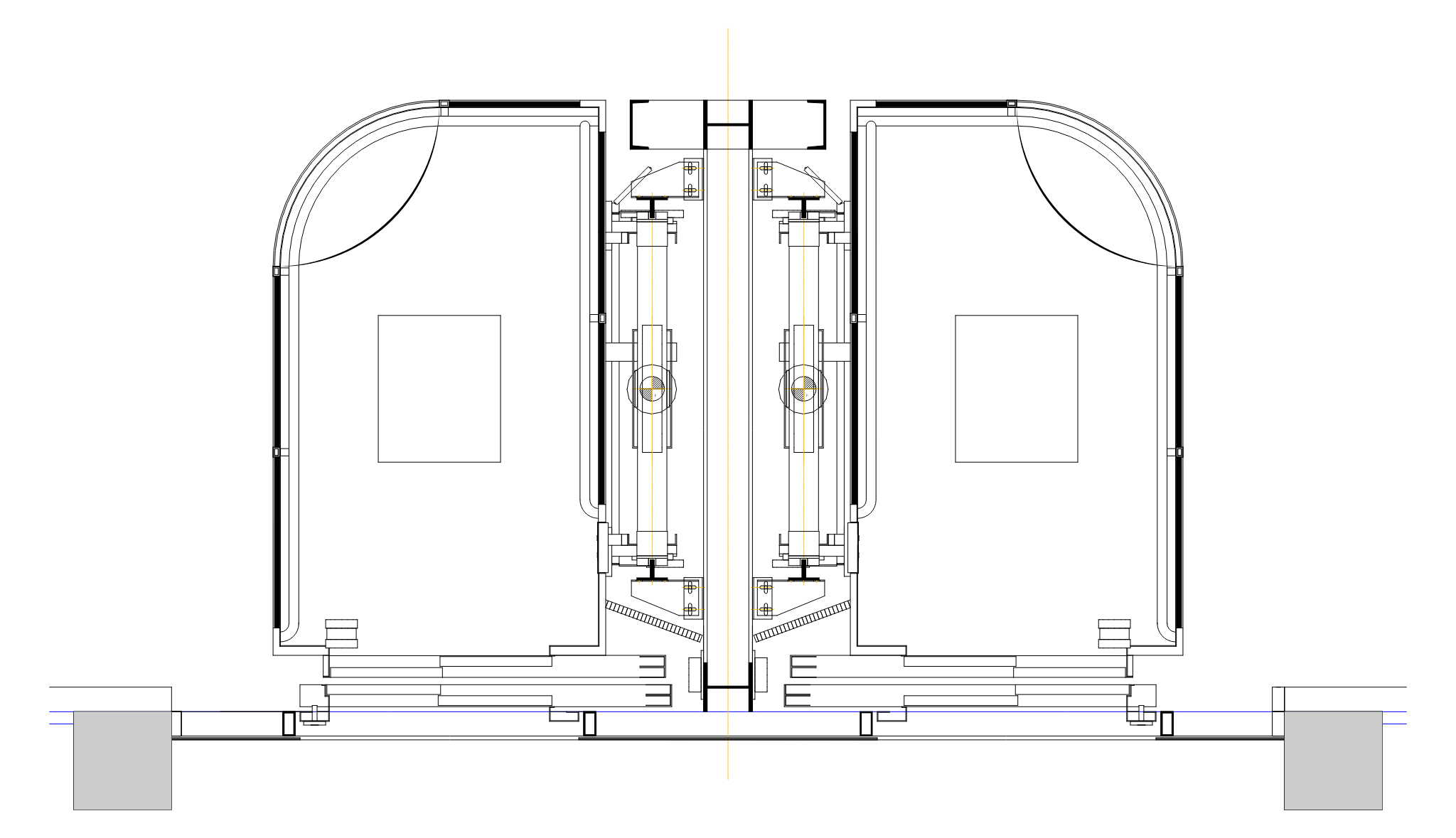
CADLens is the layer between a proprietary CAD file and software that has to reason about it. What changes between these two paths is the transport, not the data.
Your backend posts the file and reads sheets, layers, entities, and per-entity metrics back as JSON. Synchronous for small drawings, async with polling or a webhook for the rest.
The same API exposed as Model Context Protocol tools. The agent parses a drawing, reads the summary, then pulls only the entities it needs — instead of you flattening a drawing into a prompt.
It is a proprietary binary format with a new revision roughly every three years — AC1015 through AC1032 all still arrive from customers. Reading them means either a licensed converter or a clean-room library, then keeping up with the next release.
A PNG of a floor plan can't tell you which polyline is a wall, which layer it sits on, or how long it is in millimetres. Anything you want to measure, filter, or price has to come from the entities themselves.
A first parse is a weekend. Model space versus paper-space layouts, block inserts, hatch boundaries, MTEXT formatting codes, unit and extents handling, 200 MB drawings, conversion timeouts — that is the part that keeps coming back.
POST. That's it.Push a CAD file, get back a job. Poll, subscribe to a webhook, or run synchronously for small drawings. Authentication is a single bearer token.
# 1. Submit a parse job curl -X POST https://api.cadlens.co/v1/parse \ -H "Authorization: Bearer $CADLENS_KEY" \ -F "[email protected]" # 2. Poll for completion (or use a webhook) curl https://api.cadlens.co/v1/jobs/job_lH9k2c \ -H "Authorization: Bearer $CADLENS_KEY" # 3. Fetch the structured result curl https://api.cadlens.co/v1/jobs/job_lH9k2c/result -H ...
The JSON schema is versioned and stable. Hover a field on the right to highlight it in the response.
line · polyline · arc · circle · ellipse · spline · text · insertOne drawing, parsed by the production pipeline and published in full. Inspect the sheets, layers and entities in the browser, or download the JSON and diff it against your own parser.
CADLens speaks the Model Context Protocol. Point Claude — or any MCP client — at it and the agent parses drawings, walks layers, and measures geometry on its own. No glue code.
$ claude mcp add --transport http cadlens \
https://api.cadlens.co/mcp \
--header "Authorization: Bearer cadl_•••••"
✓ cadlens connected · 7 tools
> Parse this floor plan and tell me how many
circles are on the ELECTRICAL layer.Hosted endpoint — nothing to install. A local stdio server is available too, for agents that need to read CAD files off your filesystem.
A drawing can hold tens of thousands of entities — more than any context window should carry. Results are progressive: the agent reads a summary of sheets, layers, and counts first, then pulls only the entities it actually needs, capped at 500 per call.
Same API key, same quotas, same billing as REST. Discovery is machine-readable too — server card, agent skills, and llms.txt are all public.
CAD files often contain confidential engineering and architectural data. Here's how we handle them.
Stored encrypted, accessible only via short-lived signed URLs — never via public links.
Originals are purged automatically. Configurable down to 1 hour on paid plans.
Call DELETE /v1/jobs/{id} at any time to remove the file and all results immediately.
Your drawings are never used to train models or improve any third-party AI system.
Status checks, result downloads, webhooks, and system-side failures are never billed.
Higher volumes, larger files, SLA guarantees, private deployment.
The free plan includes 20 parse requests per month and never expires. Keys are issued the moment you sign in — nothing to request, nobody to wait for.